Business & money
30% off for waiting for a pair of shoes. Who benefits?
ALOHAS lets shoppers order before production and rewards early orders with a discount. We look at who carries the cost of the wait, how the model changes cash flow and what happens as the brand opens more stores.
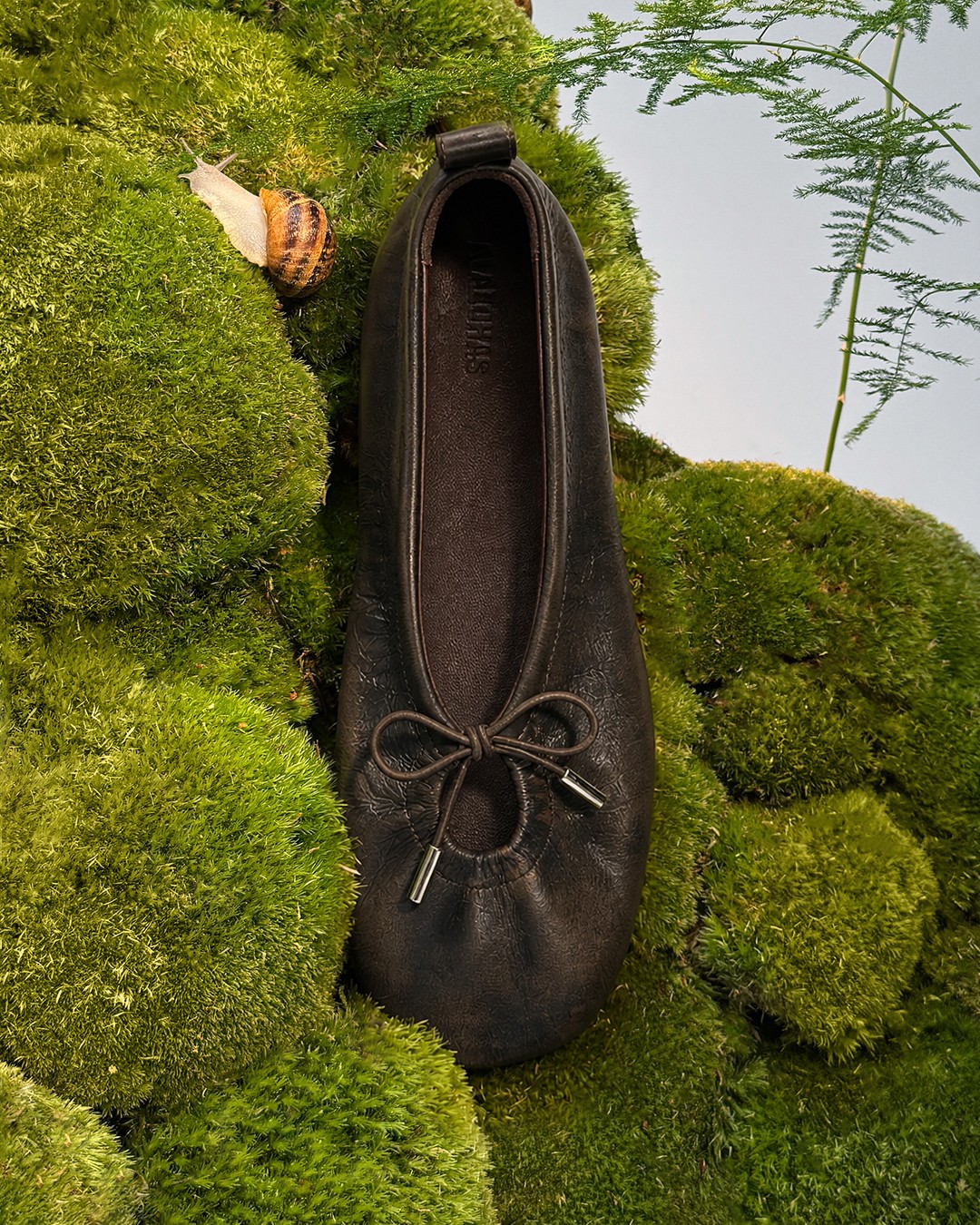
You find a pair of shoes that feels exactly right. The price is lower than you expected, but delivery is weeks away. This is not a backorder or a conventional sale. At ALOHAS, the wait is part of the offer. You order first. The shoes are made afterwards.
It sounds like a more considered way to shop. It is also a way to run a business. When customers place orders before a product exists, the brand can see demand more clearly, receive payment earlier, and make fewer guesses about which styles should fill a warehouse. In return, customers get a lower price during the launch period, but accept both the wait and the possibility that the delivery date may move.
That exchange is what makes ALOHAS interesting to AKTRIS. Not just the shoes, but the business behind them.
A purchase that begins before production
ALOHAS describes its model as on-demand production. At launch, the company collects orders before production begins and, according to its customer information, normally offers a 30% discount at that stage. Once the initial launch phase has ended, a product may return to full price even if it is still being made. A discount and a wait are therefore not the same thing. The product's stage in its life cycle determines the offer.
For a customer, this can feel like getting access to something new first while paying less. For a company, an actual order is more useful information than a guess about what might sell. A brand that can already see which sizes and colours people want can plan production differently from one that has to place a large order and hope it chose correctly.
None of this means that ALOHAS produces without risk or never holds stock. The company also sells products that are already available, handles returns, and operates physical stores. In an email to AKTRIS, press specialist Mireia Noguer describes a model in which the brand keeps limited stock and produces styles as customers place orders. That is the company's description, not an independent measurement of how much waste the model has actually eliminated.
Who puts up the money?
Here is a detail that rarely appears in a campaign image: ALOHAS takes payment when an order is placed, even if the product has not yet been shipped. The company says it needs that payment as it begins investing in materials and production.
This changes the timing of cash coming into the business. In a conventional retail model, a company may have paid its supplier long before a customer buys the shoes. With a preorder, the customer's payment arrives earlier in the process. We do not know how much of the production cost that payment covers, or the terms on which ALOHAS pays its manufacturers. But the timing of the money is a central part of the model.
To see the difference, imagine two brands planning to sell 1,000 pairs of shoes. One orders all the pairs before the season and hopes the right sizes sell. The other collects orders first and gets a clearer picture of which variations customers actually want. The second brand may reduce the risk of unsold stock. At the same time, it may give up part of the price to persuade customers to wait. This is not a free saving. It is a trade between price, time, and uncertainty.
Waiting has a cost for the customer
ALOHAS says new collections generally begin shipping around eight weeks after launch. Preordered products are given an estimated shipping window, and the company itself warns that delays can occur. When an order contains both an in-stock item and a preorder, the items are generally shipped together once everything is ready.
That is worth remembering before letting the discount make the decision for you. Do you need the shoes by a particular date? Would you have bought them at full price? Is the lower price worth paying now and receiving them later? A discount is only a good deal if it fits your real life, not just the number on a product page.
It is also easy to see why the model appeals. Fashion is often sold through the feeling that you must decide before something disappears. Here, an early decision has a specific price. ALOHAS makes waiting part of the product itself.
From screen to shop window
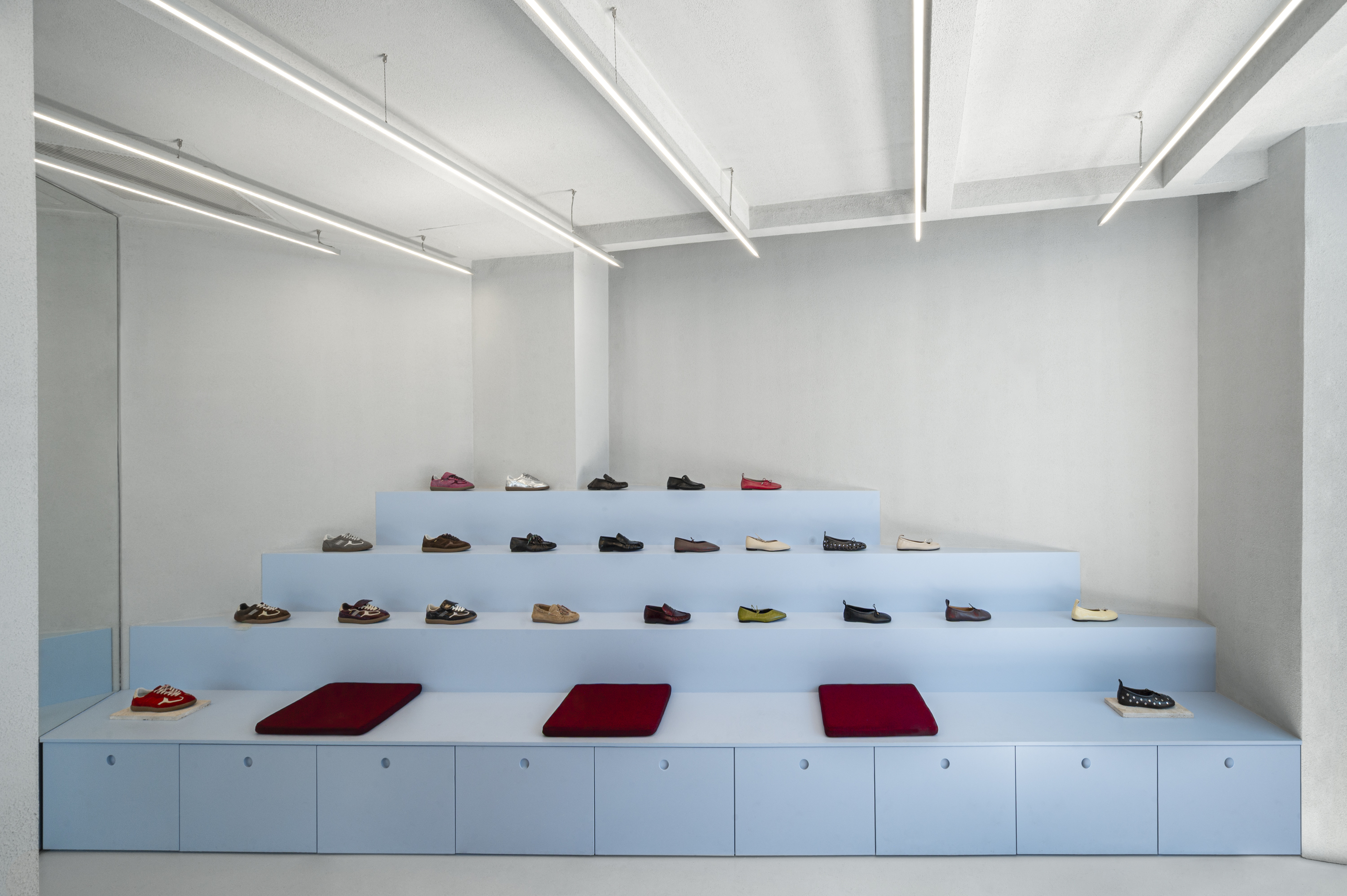
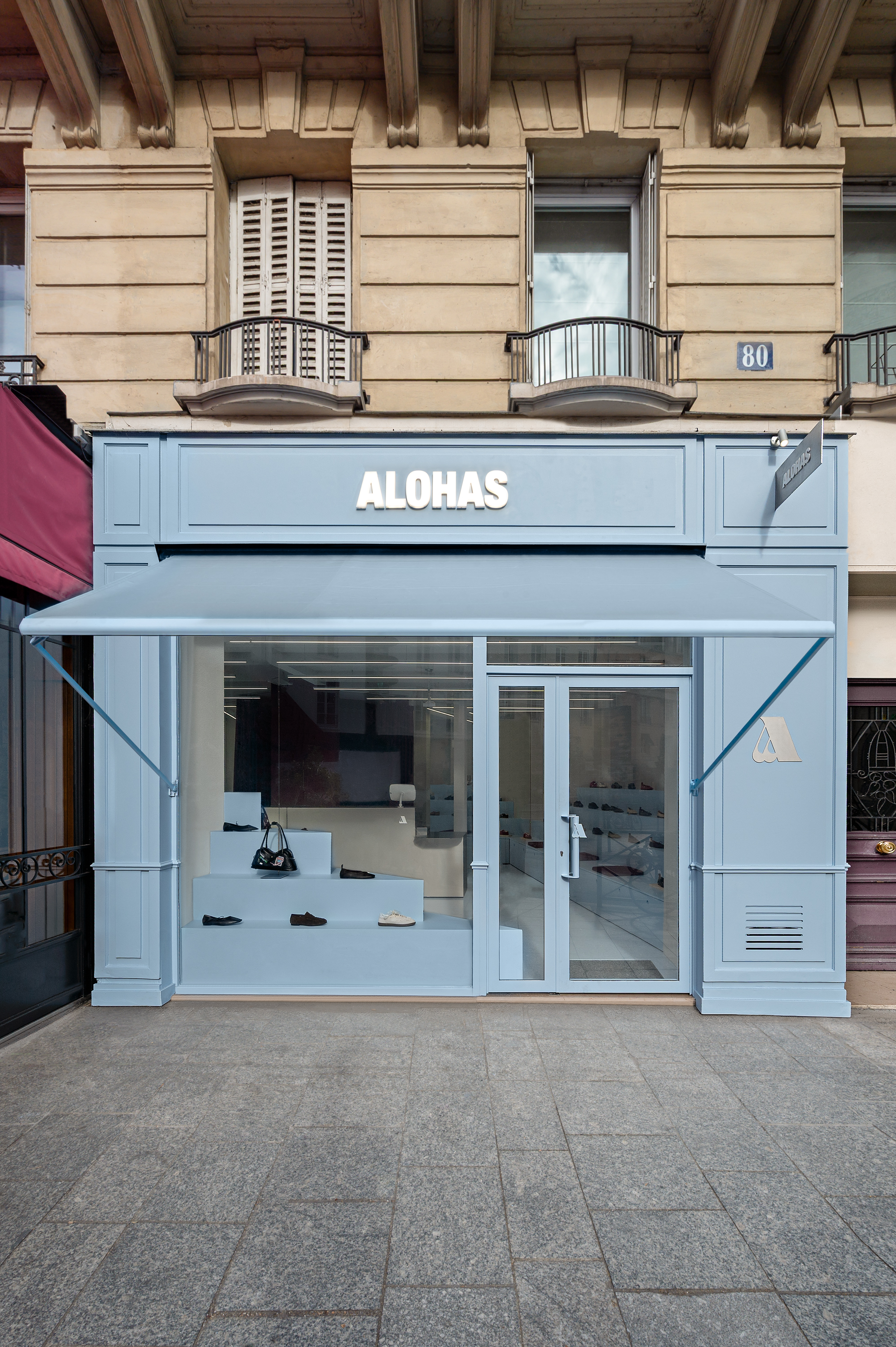
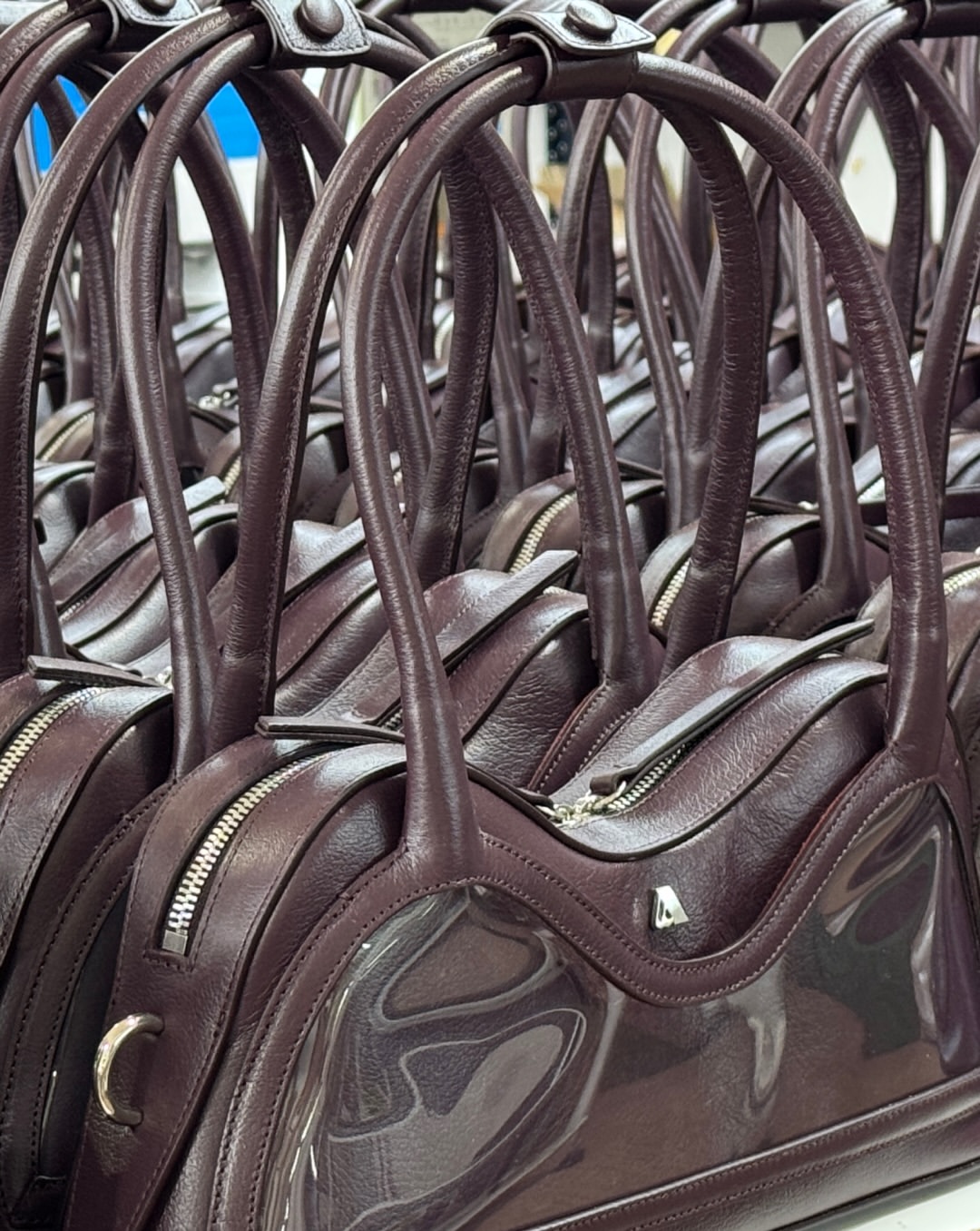
Perhaps the most interesting thing about ALOHAS now is that it is expanding in a direction that complicates its original idea. A brand known for digital preorders is opening stores. In press material sent to AKTRIS, the company describes a new store in Vienna, a second address in Paris, and its first store in San Francisco. It is also widening its product range, including the Hilma bag.
A shop solves a problem that a product photograph cannot entirely solve: customers can feel the leather and try on the shoes. But it also brings rent, staff, interiors, and a need for products to display. That makes the relationship between physical expansion and the promise of limited stock a genuine business question.
In an interview with the trade publication Modaes, founder Alejandro Porras said ALOHAS had revenue of €45 million in 2025, up from €34 million the previous year. He described online sales as the core of the business, while saying that stores help the brand meet customers and understand what they want. According to his figures at the time of the interview, the company's own stores accounted for roughly 40% of sales, online for 30%, and wholesale for 30%. These are company figures reported in an interview, not independently verified financial statements reviewed by AKTRIS.
Revenue is the amount a company sells. On its own, it tells us nothing about profit after the costs of shoes, salaries, shops, returns, and marketing. We also do not have a public breakdown showing whether preorders or the new stores are more profitable. That uncertainty matters more than an attractive growth figure.
What remains to be proven
ALOHAS says its model reduces overproduction. It makes sense that orders placed before manufacturing could provide better information and lower the risk of making too many products. But a claim about environmental impact needs more than a production concept. To test it, we would want comparable figures over time for unsold stock, returns, transport, materials, and emissions. Those figures were not included in the material we received.
This does not make the story less interesting. Quite the opposite. ALOHAS shows how a shoe brand can turn something many businesses see as a problem, waiting, into part of its pricing and inventory planning. The question now is how that model works as the company also aims to be present in more cities, on more shelves, and across more product categories.
The next time you see 30% off a new pair of shoes, ask two questions. What do I get for waiting? And what does the company gain when I pay before the shoes exist? The answers reveal more about the economics of fashion than another photograph of autumn's perfect loafers.
Sources and method
- ALOHAS on on-demand production and the launch discount
- ALOHAS on when customers are charged
- ALOHAS on delivery times and mixed orders
- Modaes interview with Alejandro Porras, 12 January 2026
- Press material and an email from ALOHAS press specialist Mireia Noguer Artigas to AKTRIS, 28 September 2026. Claims from the company are identified as such in the article.
Read next


AKTRIS WEEKLY
Mode, företagande och ekonomi. Direkt till din inkorg.
Ett genomarbetat brev med berättelser och perspektiv om bolag, varumärken, pengar och människorna som formar dem.
Gratis och utan konto. Avregistrera dig när du vill. Läs vår integritetspolicy.